Signs your trailer needs repairs or structural reinforcement
Trailer problems rarely appear all at once. More often, they start as small signs that are easy to ignore until the damage becomes harder and more expensive to deal with. A crack in one section, unusual flex under load or wear in key structural areas can all point to bigger issues developing over time.
For operators using trailers in transport, civil and regional work, recognising these warning signs early can help prevent further damage and reduce disruption. This article outlines some of the more common signs that a trailer may need repairs or structural reinforcement before the problem gets worse.
1. Visible cracks or damage in structural areas
One of the most obvious warning signs is visible cracking in the trailer frame, drawbar, chassis sections or welded joints. Even small cracks can indicate stress that has built up over time, especially if the trailer is regularly carrying heavy loads or working in rough conditions.
What matters is not just the crack itself, but what it says about the surrounding structure. A visible crack may point to movement, fatigue or load-related stress that needs a closer look before the trailer goes back into regular use.
If a trailer has visible damage in key load-bearing areas, putting off repairs usually increases the risk of wider structural issues.
2. The trailer feels less stable or shows unusual movement
Changes in how a trailer tows or carries a load can be an early sign that something is no longer working as it should. This might show up as instability, uneven movement, extra flex or a general feeling that the trailer is not tracking or sitting the way it normally does.
Sometimes the problem is obvious, but in other cases the warning sign is simply that the trailer no longer feels right in operation. That change in behaviour can be linked to wear, damage or a structural issue that has not yet become fully visible.
Have you ever noticed a trailer behaving differently under load, even though nothing looked obviously broken at first glance? That kind of change is worth taking seriously.
3. Welded joints show wear, separation or repeated failure
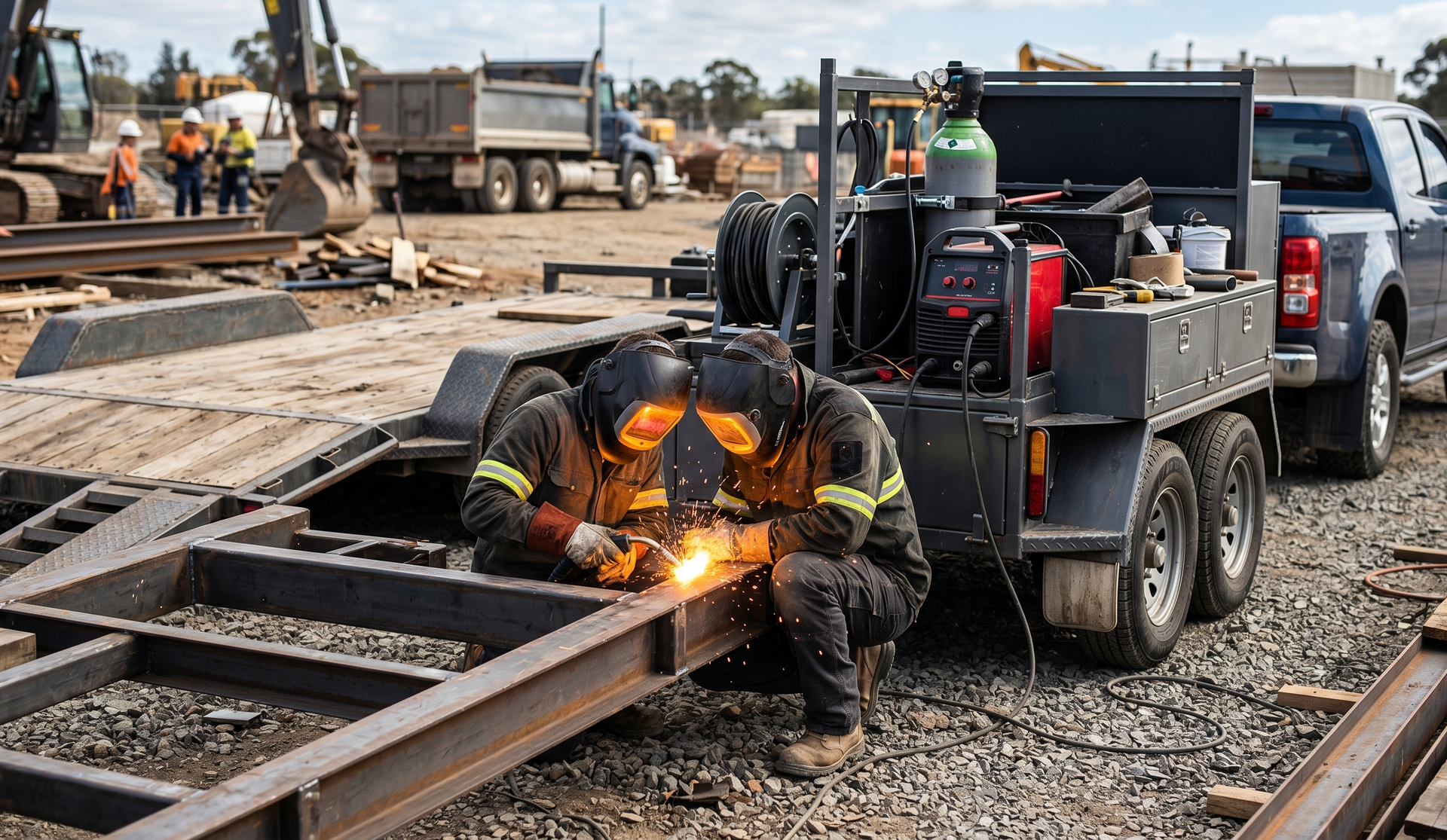
Welded sections are often the first place where stress becomes visible. If joints show signs of wear, separation or repeated cracking, it may be a sign that the trailer needs more than a simple patch repair.
Repeated failure in the same area can suggest the original section is taking more load than it should, the surrounding structure needs strengthening or the trailer is being used in conditions that require a more durable repair solution. In these cases, structural reinforcement may be the more appropriate response.
You can learn more about our heavy-duty structural welding service for trailers and fabricated components that need stronger long-term support.
4. Damage keeps returning after basic repairs
When the same problem keeps coming back, it usually means the root cause has not been addressed. A section that is repeatedly repaired but continues to fail may need a different repair approach, reinforcement or a broader modification to the trailer design.
This is one of the clearest signs that the issue should be assessed properly rather than handled with another quick fix. While a basic repair may restore function for a short period, it may not be enough for the way the trailer is actually being used.
Looking at the bigger structural picture can help avoid repeated downtime and added repair costs over time.
5. Wear is affecting usability, access or load handling
Not every serious issue starts as a break or crack. In some trailers, wear gradually affects how the trailer performs day to day. Loading may become more awkward, sections may no longer sit correctly or the trailer may not handle loads as consistently as it once did.
These changes can indicate underlying wear or structural weakness, especially in trailers that have seen long-term heavy-duty use. What looks like a usability problem may actually point to sections that need repair, strengthening or modification.
If the trailer no longer suits the job the way it used to, our trailer modifications and repairs service may be the right place to start.
6. Regional working conditions are accelerating wear
Trailers working across regional and heavy-duty environments often face a harsher level of wear than trailers used in lighter conditions. Rough terrain, long towing distances and repeated heavy loading all contribute to faster fatigue in structural sections.
That is why trailers used in these environments should be checked with operating conditions in mind, not just surface appearance. A trailer can still look usable while carrying wear or stress that will eventually lead to more serious damage.
Understanding how the trailer is used is essential when deciding whether it needs a simple repair, structural welding or a more comprehensive modification plan.
Get trailer issues assessed before they become bigger repairs
Small warning signs often turn into larger repair problems when they are ignored for too long. Visible cracking, repeated damage, changes in trailer behaviour and wear in structural areas can all point to the need for repair or reinforcement.
If your trailer is showing any of these signs, contact our team to discuss the issue and the most practical next step. You can also explore our broader fabrication and welding services to see how we support trailer repairs, structural welding and heavy-duty fabrication work.