What to consider before modifying a work trailer
Modifying a work trailer can be a practical way to improve how it performs, carries loads or fits the demands of the job. In some cases, a modification is a smarter option than full replacement, especially when the trailer is structurally sound but no longer suits the way it is being used.
That said, not every modification delivers the same value. The best results come from understanding what needs to change, why the trailer is no longer working as well as it should and how the modification will affect strength, usability and long-term performance. This guide covers the main things to think about before making changes to a work trailer.
1. Be clear about what the trailer is not doing well
The first step is identifying the actual problem. A trailer may need modification because it no longer handles a particular load well, because access is awkward, because certain sections wear too quickly or because the layout does not suit day-to-day use.
Being clear about the issue helps avoid making changes that do not solve the real problem. For example, adding features without addressing structural limitations can leave the trailer more complicated but not more useful.
Looking closely at how the trailer is being used often reveals where the improvement needs to happen.
2. Consider whether the trailer is a good candidate for modification
Some trailers are well suited to modification, while others may be better repaired, reinforced or replaced depending on their condition. The decision depends on factors such as structural integrity, existing wear, previous repairs and the type of changes being considered.
If the trailer already has damage or repeated failure in key areas, it may need more than a simple upgrade. In those cases, the modification plan should take broader repair or reinforcement work into account so the final result is safe and durable.
This is where practical assessment matters more than assumptions. A trailer should be modified because it makes sense, not just because it seems like the cheaper option in the short term.
3. Think about how changes will affect strength and load handling
Even a useful modification can create new issues if it changes how the trailer carries weight or handles stress. Adjustments to layout, access points, ramps, storage sections or structural components all affect the way loads are managed.
That is why modifications should be planned with the full trailer in mind, not just the individual section being changed. A practical design needs to consider load paths, reinforcement requirements and how the trailer will perform once the modification is complete.
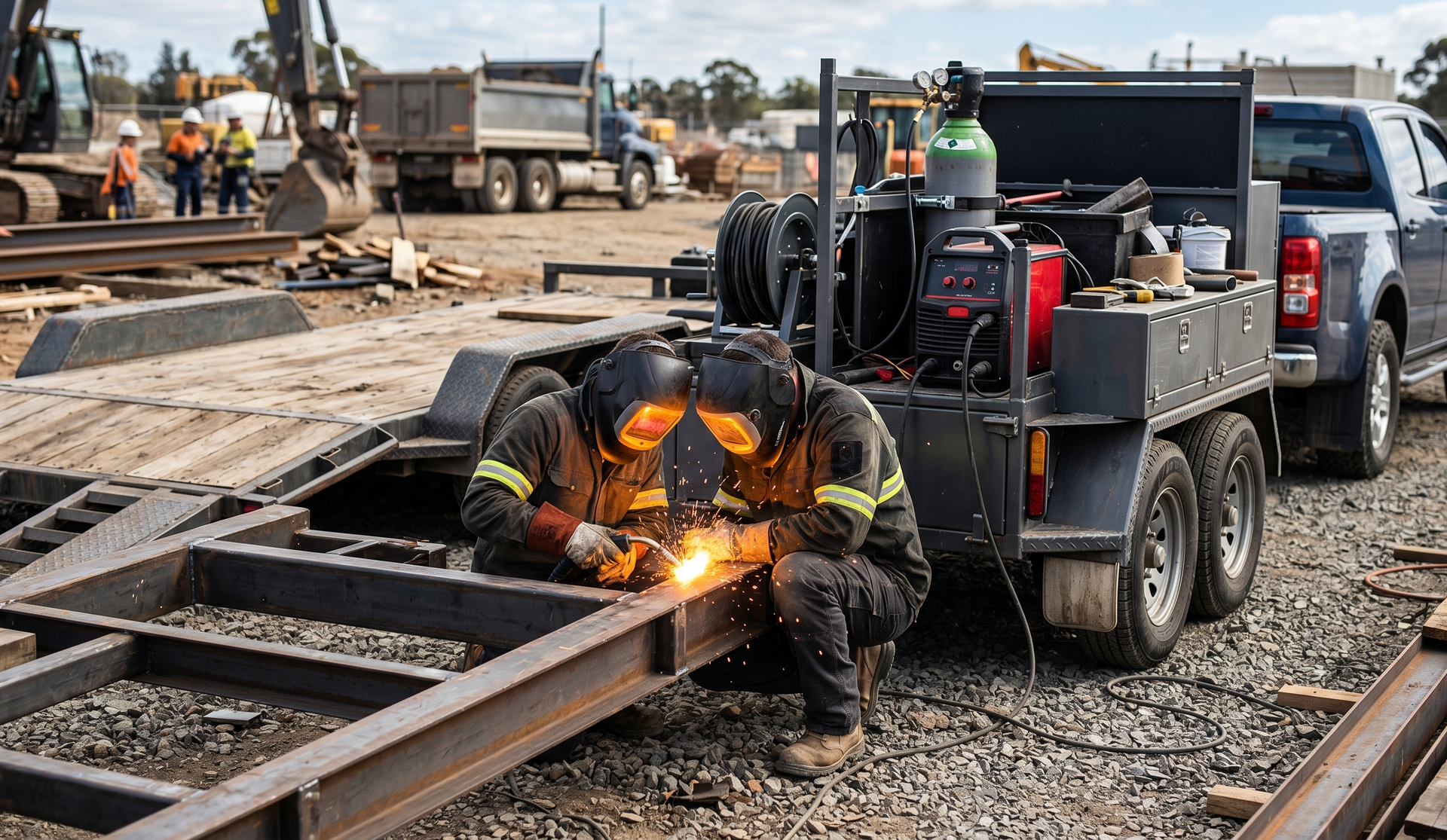
If structural work is part of the change, our heavy-duty structural welding service supports stronger reinforcement and fabrication outcomes for demanding trailer applications.
4. Focus on usability, not just added features
One of the biggest reasons to modify a trailer is to make it easier and more efficient to use. That might mean improving loading access, changing the deck layout, strengthening key sections or adjusting features so the trailer better suits the job.
The goal should be to improve function, not just add more components. Good modifications make the trailer more practical in real day-to-day use, rather than introducing extra complexity that creates more points of wear or slows down the workflow.
Have you ever seen a trailer with plenty of added features that still did not really suit the job? That usually comes down to modifications being made without enough focus on actual usability.
5. Plan modifications around long-term use, not just the immediate issue
A modification often starts with one immediate problem, but it should also take future use into account. If the trailer is likely to carry different loads, operate in tougher conditions or support a changing workflow, those factors should be considered before the work begins.
Planning modifications with long-term use in mind can help avoid repeated changes later and make the trailer more adaptable as the work evolves. This is especially important for businesses that need equipment to stay commercially useful over time.
You can explore our trailer modifications and repairs service to see how practical upgrade work can support better long-term performance.
6. Work with a fabricator who understands practical trailer use
The value of a trailer modification comes from how well it improves the trailer in service. That requires more than just welding in a few extra sections or changing one part of the frame. It requires understanding how the trailer is used, where the pressure points are and what the modified trailer needs to do reliably once the work is complete.
Working with a fabricator who understands practical heavy-duty use makes it easier to identify the right changes and avoid modifications that look fine in theory but do not perform well in the field.
You can also review our broader fabrication and welding services to understand the different ways modification work can tie into repairs, fabrication and reinforcement.
Talk through your trailer modification plans before making changes
A well-planned modification can make a trailer safer, easier to use and better suited to the work it needs to handle. The key is making changes for the right reasons and understanding how those changes will affect the trailer as a whole.
If you are considering a modification, contact our team to discuss the trailer, the changes you are thinking about and the most practical way to approach the work. The right advice early can help you avoid unnecessary changes and get more value from the finished result.