When mobile welding is the best option for trailer repairs
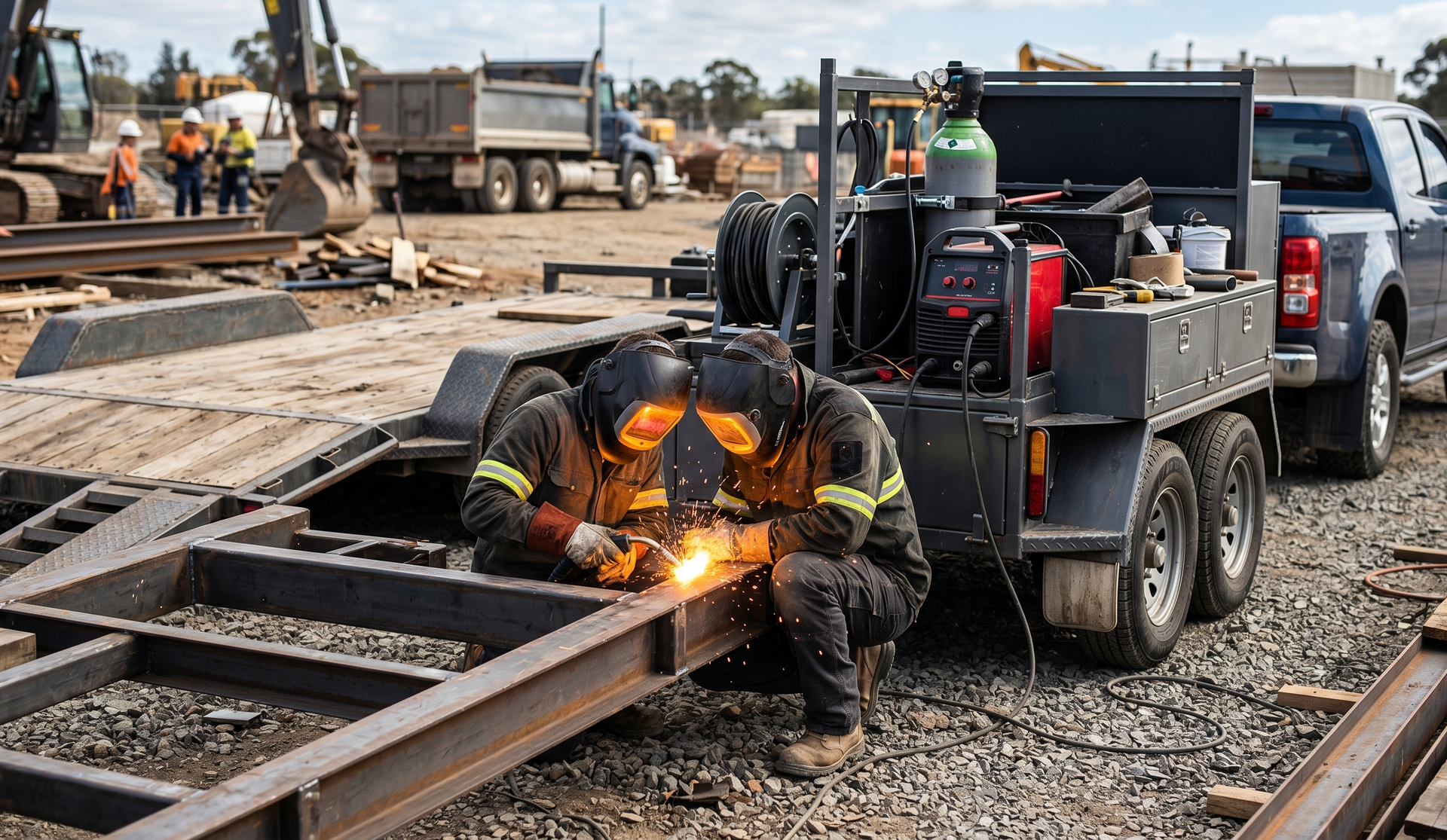
When a trailer is damaged or develops wear in a working environment, the first question is often whether it needs to be taken back to a workshop or whether the repair can be handled on site. In many cases, mobile welding is a practical option that helps reduce downtime and avoids the extra logistics involved in moving damaged equipment.
That does not mean every job should be done in the field. The right approach depends on the type of damage, the condition of the trailer and the environment where the work needs to happen. Understanding when mobile welding makes sense can help operators respond faster and make better decisions about repairs.
1. Mobile welding is useful when moving the trailer is difficult
One of the clearest reasons to use mobile welding is when the trailer is hard to move safely or efficiently. This might be because the trailer is damaged, because it is already on a live site or because transporting it to a workshop would add unnecessary downtime and cost.
For operators working across regional areas, this can be especially important. Even a relatively straightforward repair can become more disruptive if the trailer has to be taken off the job, arranged for transport and brought back again before work can continue.
In situations like these, on-site repair work may be the most practical option. You can learn more about our mobile welding services and how they support trailer and heavy-duty repair work in the field.
2. It suits certain types of trailer damage and repair work
Mobile welding can be well suited to a range of trailer repair issues, particularly where the damage is localised and the required work can be carried out safely on site. This may include crack repairs, broken sections, reinforcement work or repairs to areas that have worn over time through repeated use.
The key point is that the trailer still needs to be properly assessed. Not every repair is best handled on site, and some jobs may require workshop access, more extensive fabrication or staged repair work to get the right result.
That is why practical assessment matters more than assumptions. A repair should be planned around what the trailer needs to return to safe, usable service.
3. Mobile welding helps reduce downtime on active jobs
For many operators, the main advantage of mobile welding is that it reduces the amount of time a trailer is out of action. When equipment supports transport, civil or field-based work, even short delays can affect scheduling, productivity and cost.
On-site welding helps reduce some of that disruption by bringing the repair capability to the job rather than forcing the job to stop around the repair. This can be particularly valuable when the trailer is needed again quickly or when replacing it temporarily is not realistic.
Have you ever had a small trailer issue turn into a larger delay simply because of the time it took to move equipment around? That is exactly where mobile welding can make a practical difference.
4. It is a good option when the repair is practical, not just possible
There is a difference between a repair being technically possible on site and it being the most practical option. A good mobile welding job still needs safe access, suitable working conditions and enough control over the repair process to achieve a durable result.
That means factors such as trailer position, surrounding conditions, repair complexity and the scope of the damage all need to be considered before deciding on the approach. Some repairs are best handled on site, while others are better completed in a workshop where more extensive fabrication can be done.
Looking at the repair in practical terms helps avoid short-term fixes that do not match the actual demands of the trailer once it goes back into service.
5. Mobile welding can work alongside broader repair and modification work
In some cases, mobile welding is only one part of the solution. A trailer may need an immediate on-site repair to restore basic function, followed by more complete repair or modification work later. This is common where the trailer has broader wear issues, damage in multiple areas or an opportunity to improve the design while repairs are being considered.
That is where it helps to look at the bigger picture. A job that starts as a simple repair might also benefit from reinforcement, layout changes or follow-up fabrication work once the trailer is back under controlled conditions.
If the trailer needs more than a basic repair, our trailer modifications and repairs service may be the better long-term fit.
6. The best repair decision comes from understanding the trailer and the job
Mobile welding is at its best when it is used for the right reasons. It is not just about convenience. It is about choosing a repair method that suits the trailer, the damage and the operating environment.
For businesses working in regional areas, practical decision-making matters. A repair needs to do more than get the trailer moving again for a day. It needs to support ongoing use, reduce repeat issues and match the level of work the trailer is expected to handle once it is back in service.
That is why repair planning should always focus on the condition of the trailer and the most useful outcome, not just the fastest patch available.
Talk to a fabricator about the right repair approach
Mobile welding can be the right option when the trailer is difficult to move, when downtime needs to be reduced and when the repair can be completed safely and properly on site. It is a practical service for the right type of job, but the best outcome always comes from matching the repair method to the actual condition of the trailer.
If you need help assessing a trailer repair, contact our team to discuss the damage, the job location and the most practical next step. You can also explore our full range of fabrication and welding services to see how we support trailer repairs, modifications and heavy-duty work.