How to choose the right custom trailer for heavy-duty work
Choosing the right custom trailer for heavy-duty work is not just about size or price. The way a trailer is designed and fabricated directly affects how safely it tows, how easy it is to use and how well it holds up over time. For operators working in transport, civil and regional environments, getting the design right from the start can prevent ongoing issues and unnecessary downtime.
This guide breaks down the key things to consider when planning a custom trailer so you can end up with something that actually suits your work, rather than trying to make a generic trailer fit later.
1. Start with how the trailer will actually be used
The most important step is understanding the job the trailer needs to do. This includes the type of load, how often it will be used, how it will be loaded and unloaded and the conditions it will operate in.
For example, a trailer used to transport machinery has very different requirements to one used for general freight or tools. Thinking through real use cases early helps avoid design compromises later on.
If you are unsure where to start, reviewing your current setup and where it falls short can help identify what needs to change.
2. Get load capacity and weight distribution right
Load capacity is more than just a number. How weight is distributed across the trailer affects stability, braking and towing performance. Poor weight distribution can lead to uneven wear, handling issues and increased stress on key components.
A custom trailer allows for proper axle placement, deck layout and structural support so the load is balanced and the trailer performs consistently under real working conditions.
For heavy-duty work, these details are critical to both safety and long-term reliability.
3. Design for access, loading and day-to-day use
A trailer might meet all the required specifications, but still be frustrating to use. Access points, ramps, tie-down locations and deck height all influence how easy it is to load and secure equipment.
Custom fabrication makes it possible to design around how the trailer will actually be used. This can save time on site, reduce handling risks and improve overall efficiency.
Small usability improvements often make a noticeable difference once the trailer is in regular use.
4. Consider the conditions the trailer will work in
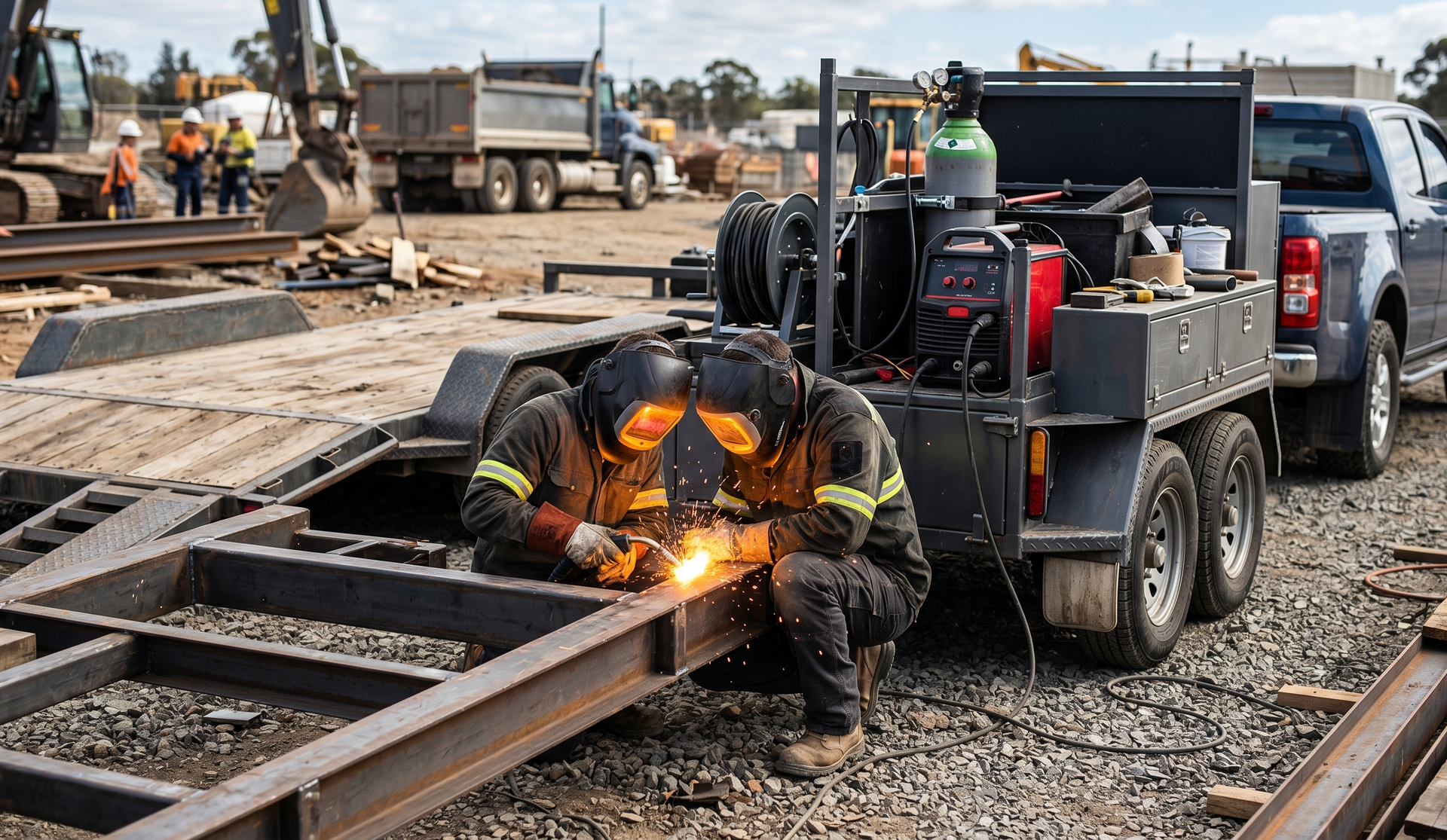
Trailers used in regional areas are often exposed to rough terrain, long distances and constant wear. Materials, weld quality and overall construction need to reflect these conditions.
Choosing a trailer built for durability helps reduce the likelihood of ongoing repairs and unexpected downtime, particularly in areas where access to repair services may be limited.
Understanding your operating environment is just as important as understanding the load itself.
5. Plan for modifications and future requirements
Trailer requirements can change over time as your work evolves. A custom build can allow for future modifications, upgrades or adjustments without needing a complete rebuild.
Planning ahead during the design stage makes it easier to adapt the trailer later, whether that means adding features, adjusting layout or strengthening certain sections.
This is especially important for businesses that expect changes in equipment or load types.
6. Work with a fabrication team that understands the job
The value of a custom trailer comes from how well it matches the work it is built for. Working with a team that understands heavy-duty applications helps ensure the design is practical, not overcomplicated.
Clear communication about how the trailer will be used makes it easier to identify the right approach and avoid unnecessary features that add cost without adding value.
You can explore more about trailer fabrication and welding services to understand what is typically involved in these projects.
Get the right trailer design from the start
Choosing a custom trailer comes down to understanding your work, planning the design properly and focusing on practical outcomes. When those factors are considered early, the result is a trailer that is safer, easier to use and better suited to long-term operation.
If you are planning a build or need help working through your options, contact our team to discuss your requirements and the most practical way forward.
You can also learn more about our custom trailer fabrication services and how we approach builds for transport and heavy-duty use.